Every bowl of pho tells a story. Not just of the hours spent simmering bones and spices, but of a dish that crossed oceans, survived wars, and became one of the most beloved soups on Earth. The history of pho is a story of resilience, adaptation, and flavour — and it stretches from the streets of Hanoi all the way to Somerset Street in Ottawa’s Chinatown.
At Vietnam Palace Restaurant, that story has been unfolding for over 35 years. But to understand what makes their pho special, you need to go back to the beginning — to a humble noodle soup that changed the world.
Where Pho Began: Northern Vietnam, Early 1900s
The exact origin of pho is debated by food historians, but most agree it emerged in northern Vietnam in the late 19th to early 20th century, likely in the provinces surrounding Hanoi. The name itself may derive from the French pot-au-feu (a French beef stew) or the Cantonese word fuh for rice noodles.
What’s clear is that pho was born at a crossroads of cultures. Vietnam was under French colonial rule, and the French appetite for beef created a surplus of beef bones — which Vietnamese cooks transformed into something entirely new. They combined French-influenced beef broth techniques with Chinese rice noodle traditions and Vietnamese aromatic spices to create a soup unlike anything the world had tasted before.
A Timeline of Pho’s Journey
| Era | What Happened |
|---|---|
| 1880s-1920s | Pho emerges in northern Vietnam, likely in Nam Định province. Street vendors carry steaming pots on shoulder poles through Hanoi’s streets. |
| 1930s-1940s | Pho becomes Hanoi’s signature dish. Fixed pho shops open alongside the street vendors. The dish is still exclusively beef (phở bò). |
| 1954 | Vietnam divides at the 17th parallel. Nearly a million northerners flee south, bringing pho to Saigon. Southern-style pho is born — sweeter broth, more herbs, more toppings. |
| 1960s-1970s | Chicken pho (phở gà) gains popularity as a variation. Pho shops multiply across South Vietnam. |
| 1975-1980s | Fall of Saigon. Vietnamese refugees — the “boat people” — flee to Canada, the US, France, and Australia. They bring pho with them. |
| 1989 | Vietnam Palace Restaurant opens on Somerset Street in Ottawa’s Chinatown. One of the first Vietnamese restaurants in the capital. |
| 1990s-2000s | Pho goes global. Pho restaurants open in major cities worldwide. Food writers call it one of the greatest soups ever created. |
| 2020s | Pho is recognized internationally as a cultural treasure. Vietnam Palace continues serving Ottawa, now with 664 Google reviews and 35+ years of history. |
North vs South: Two Schools of Pho
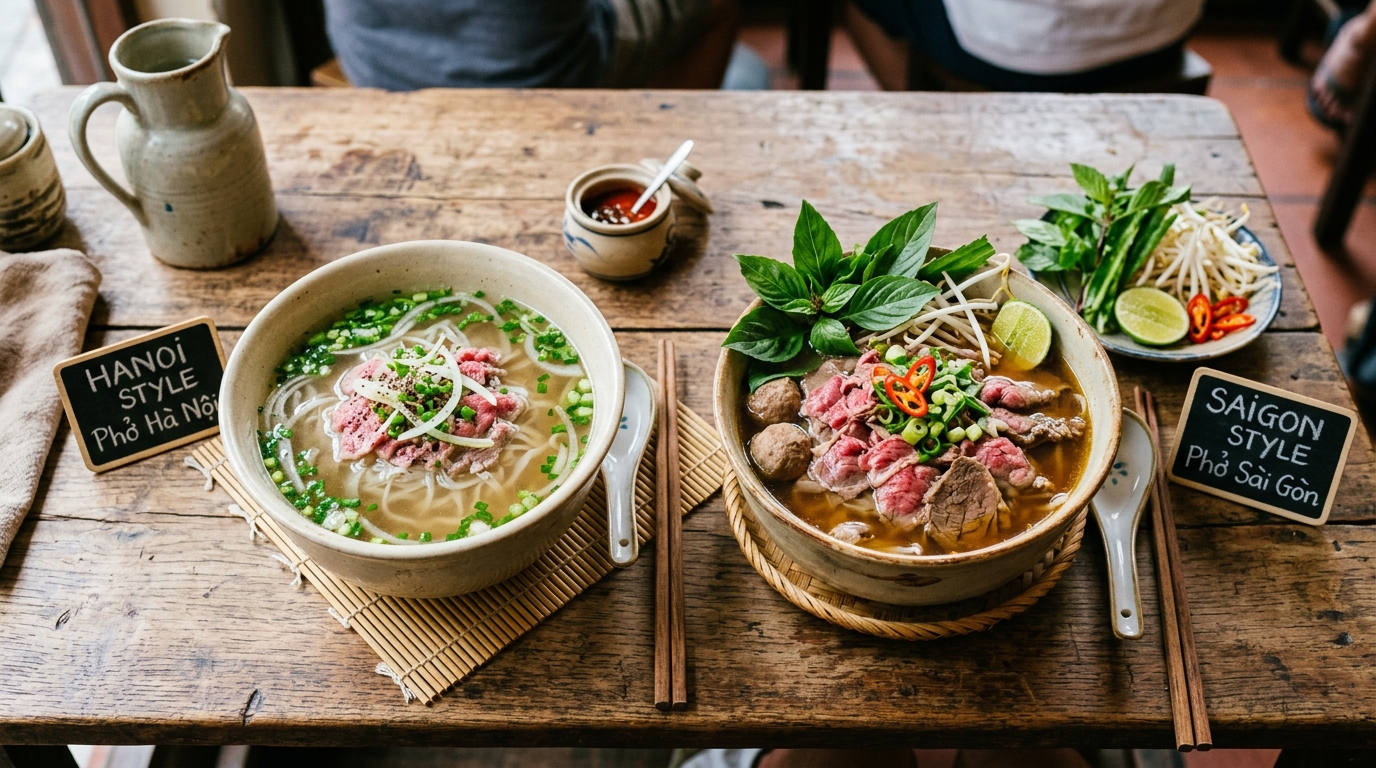
The 1954 partition of Vietnam didn’t just divide a country — it created two distinct styles of pho that survive to this day.
Northern Style (Phở Bắc — Hanoi)
- Broth: Clear, clean, and intensely beefy. The spices are subtle — just enough star anise and ginger to perfume the broth without dominating.
- Noodles: Wide, flat rice noodles
- Toppings: Minimal. Beef and noodles. Maybe some green onion and a squeeze of lime. That’s it.
- Philosophy: The broth is everything. Don’t mess with it.
Southern Style (Phở Sài Gòn — Saigon)
- Broth: Slightly sweeter and bolder. More spices, sometimes with a hint of rock sugar.
- Noodles: Thinner rice noodles
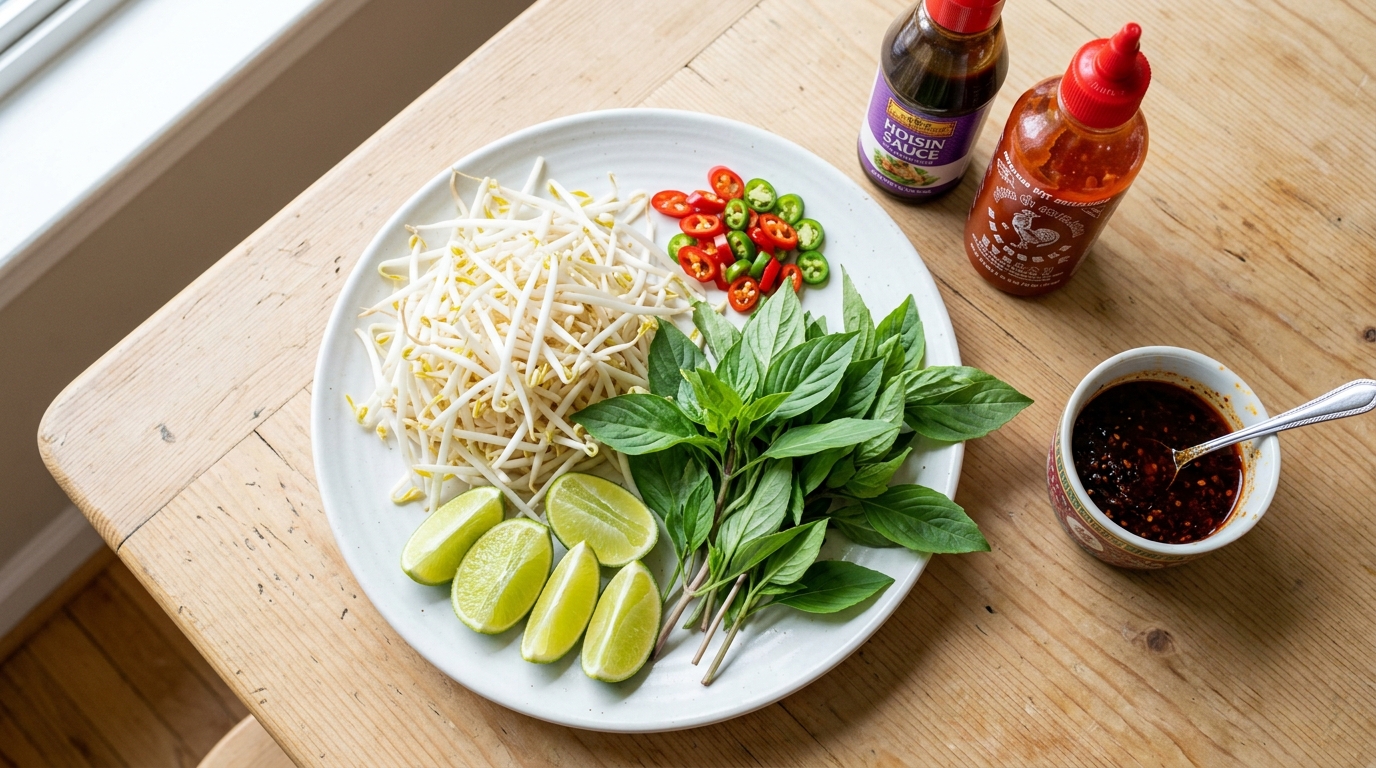
- Toppings: The full production. Bean sprouts, Thai basil, lime, chili, hoisin sauce, Sriracha. A massive herb plate accompanies every bowl.
- Philosophy: Pho is a canvas. Customize it. Make it yours.
At Vietnam Palace, you’ll find a style that draws from both traditions — a rich, carefully spiced broth that honours the northern roots, served with a generous southern-style herb plate that lets you customize every bowl. It’s the best of both worlds.
How Pho Came to Canada — And to Ottawa
After the fall of Saigon in 1975, waves of Vietnamese refugees resettled across Canada. By the 1980s, Vietnamese communities had established themselves in Toronto, Vancouver, Montreal, Calgary, and Ottawa. They opened restaurants, grocery stores, and community centres — and they brought their food traditions with them.
Ottawa’s Chinatown on Somerset Street became a natural home for Vietnamese cuisine. The neighbourhood was already a multicultural food hub, and Vietnamese restaurants quickly earned loyal followings among locals who had never tasted anything like authentic pho.
In 1989, Vietnam Palace opened its doors at 819 Somerset St W. From day one, it was a family operation — a family recipe, a family commitment to authenticity, and a family determination to serve the real thing. No shortcuts. No compromises. Just honest, soul-warming pho made the way it’s been made for generations.
Read more about Vietnam Palace’s founding story in our post From Saigon to Somerset.
Why Vietnam Palace’s Pho Matters
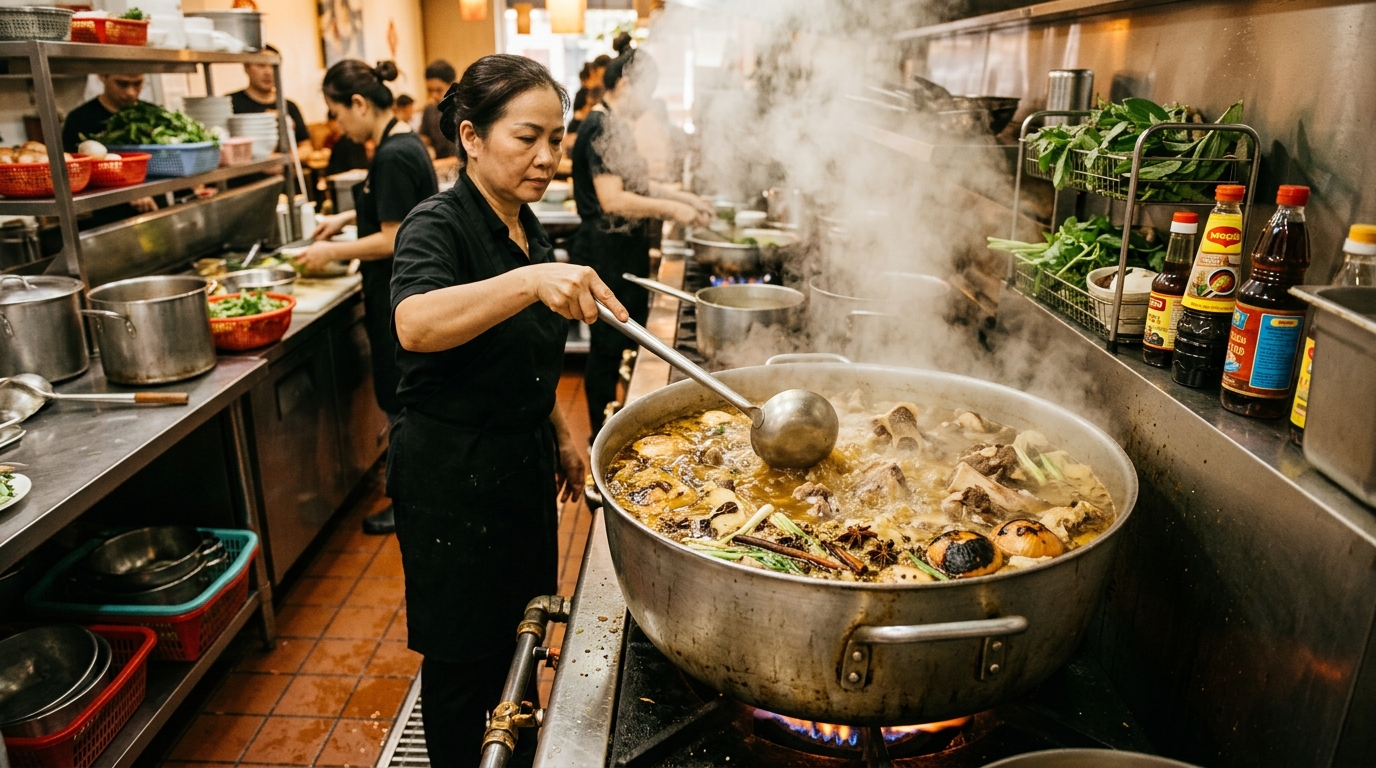
In a world of instant pho packets and fast-casual noodle chains, places like Vietnam Palace are increasingly rare. The broth still simmers for 12+ hours every single day. The spices are still toasted and bundled by hand. The recipe hasn’t changed because it doesn’t need to.
With 664 Google reviews, 100+ dishes on the menu, and multiple generations of Ottawa families who consider it their go-to Vietnamese restaurant, Vietnam Palace isn’t just serving pho — it’s preserving a culinary tradition that spans over a century.
Every bowl connects you to that history. The French colonial influence in the beef bones. The northern Vietnamese precision in the spice balance. The southern Vietnamese generosity in the herb plate. The immigrant determination in every hour of simmering. And the Ottawa community that has made Vietnam Palace a Chinatown landmark for over 35 years.
Frequently Asked Questions
Where did pho originally come from?
Pho originated in northern Vietnam in the late 19th to early 20th century, likely in Nam Định province near Hanoi. It was influenced by both French and Chinese culinary traditions.
Is pho from North or South Vietnam?
Pho was born in the north (Hanoi), but evolved into a distinct southern style after 1954 when northerners brought it to Saigon. Both styles exist today — northern pho is minimal and broth-focused, while southern pho features more herbs, toppings, and a sweeter broth.
When did pho come to Canada?
Vietnamese refugees began arriving in Canada after 1975, bringing pho and other dishes with them. By the late 1980s, Vietnamese restaurants were established in major cities. Vietnam Palace opened in Ottawa in 1989.
Why is pho pronounced “fuh” and not “foh”?
The Vietnamese word phở is pronounced with a rising tone, similar to “fuh?” with a slight upward inflection. The spelling with the accent marks (ở) indicates the specific Vietnamese tone. Most English speakers approximate it as “fuh.”
What makes Vietnam Palace’s pho authentic?
A 12+ hour bone broth, hand-toasted whole spices, charred ginger and onion, fresh daily ingredients, and a family recipe that hasn’t changed since 1989. No shortcuts, no bouillon cubes, no MSG.
Taste the History at Vietnam Palace
From a street vendor’s shoulder pole in 1900s Hanoi to your table on Somerset Street — pho has travelled a long way. And at Vietnam Palace, every bowl honours that journey.
📍 Location: 819 Somerset St W, Ottawa (Chinatown)
📞 Phone: (613) 238-6758
🍜 Book a Table: Reserve online
Over a century of history. Over 35 years in Ottawa. One unforgettable bowl.